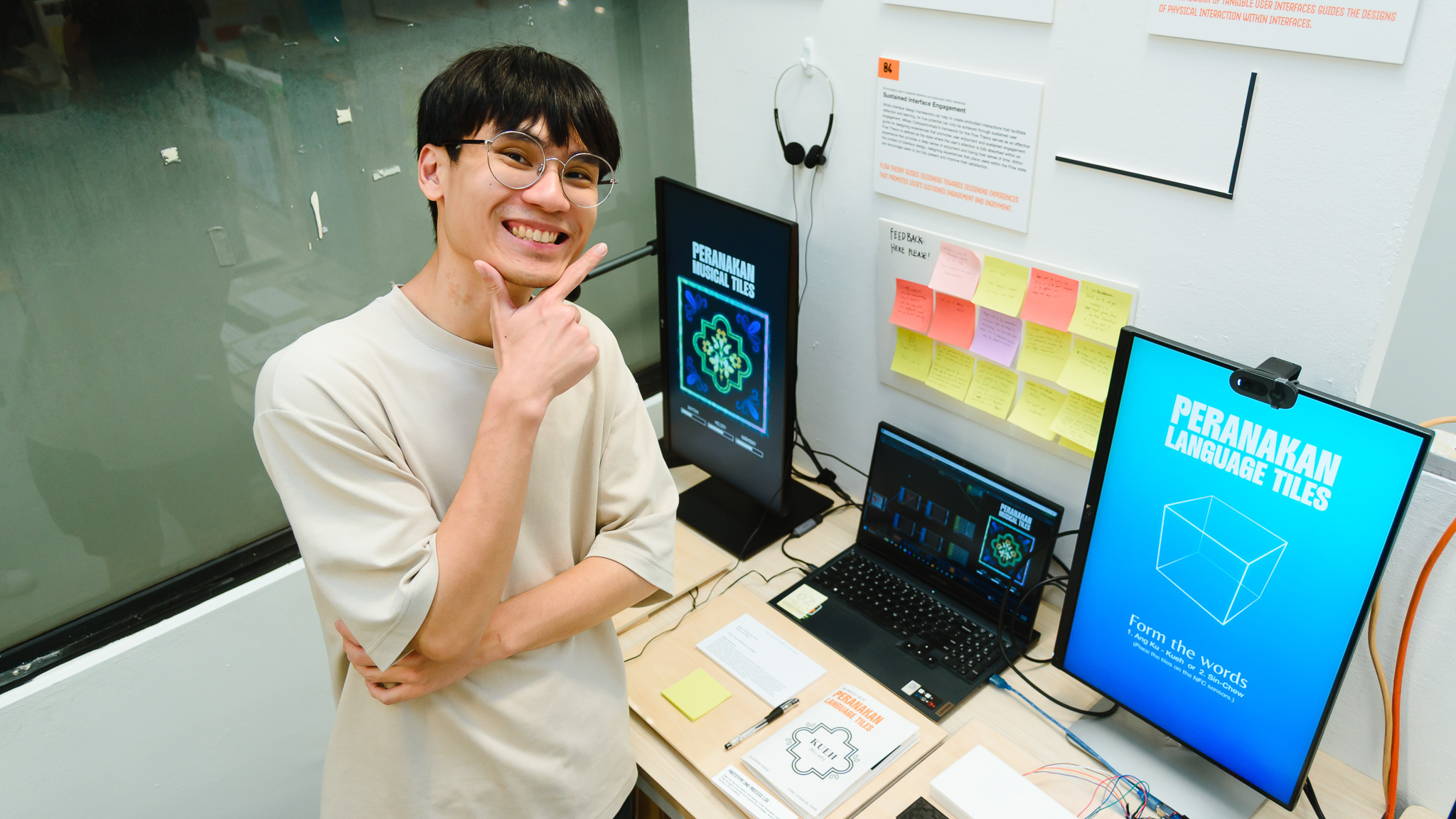
A shot of me at OS by Mr Jared
Setting up for Open Studios was hectic. I scrambled to print and to shop for the different wooden
boards I need for my presentation set up. On the first day of Open Studios, I was quite nervous and
worried about how it would go. To be honest, I was also quite defeated about my project and felt that
it was lackluster for some reason (maybe i been working on it for too long or just a confidence dip).
Like it got to a point where I really disliked my project. However, Open Studios completely changed
it!
Majority of the people liked it and I even had some reactions and praises from industry
professionals, saying that it was really good. Words cannot express how much that meant to me,
especially at my lowest point. Most importantly, they left me very constructive feedbacks that was
very helpful in my work. I also managed to snap some shots of my prototypes!
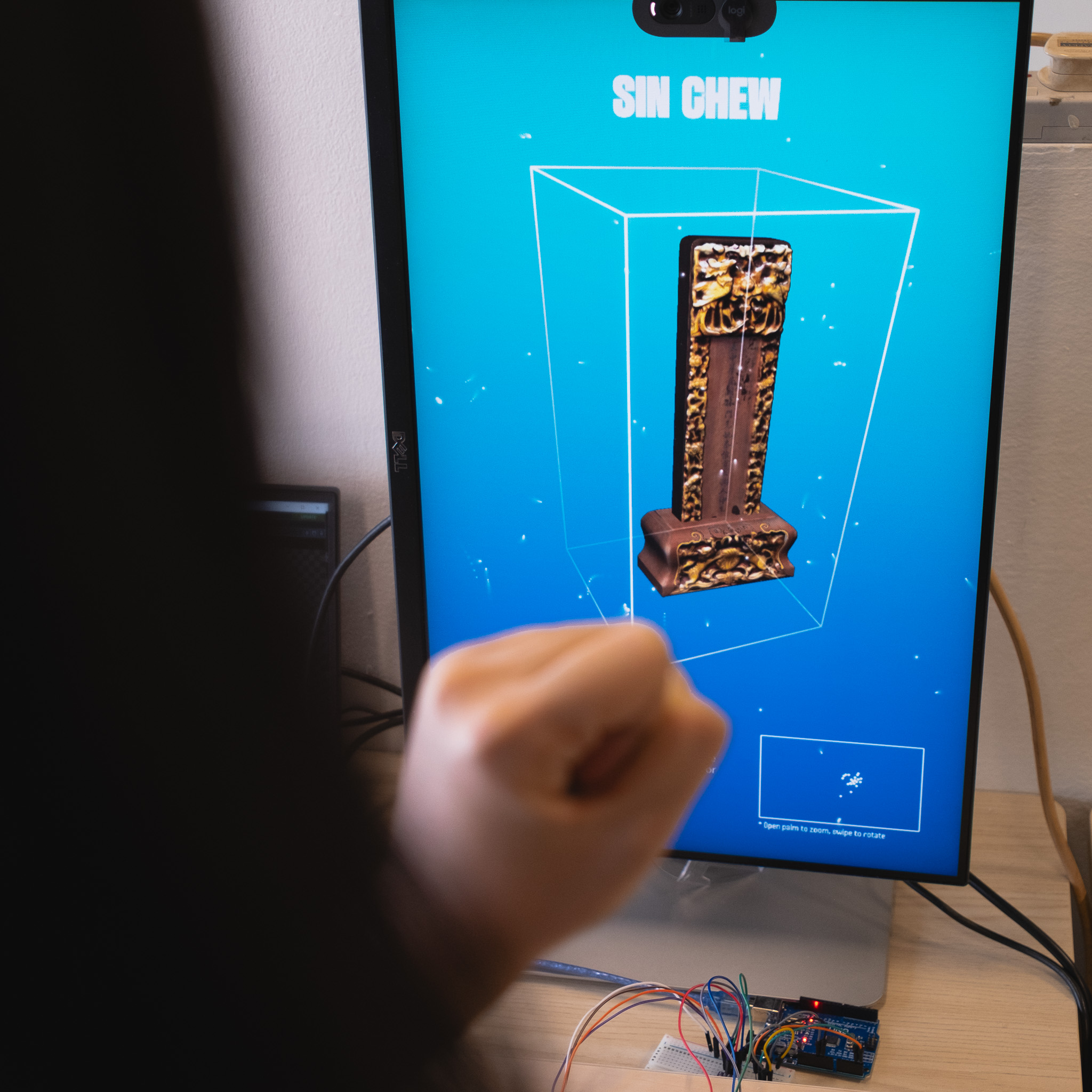
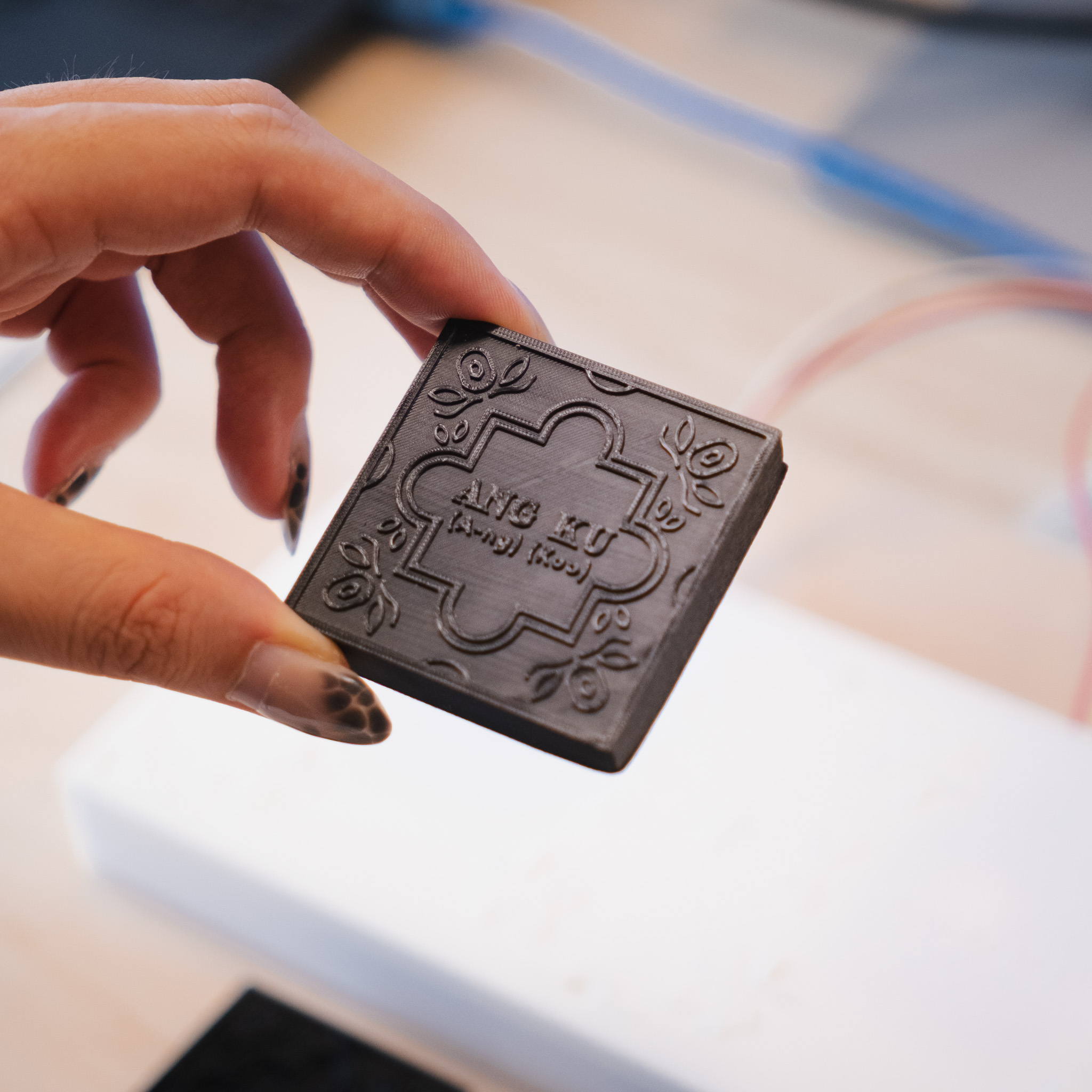
Right now, the tiles are fixed in their pairings (I.E kueh only has one correct placement) and cannot be mixed with other words. Many felt that it was a missed opportunity and making the tiles more versatile in their pairing would make it more consistent with how Peranakan tiles are actually used.
Some suggested the possibility of seeing the ingredients within the Ang Ku Kueh. Right now, the learning aspect of the interface is lacking and having the ability to learn about the ingredients within the kueh can help enhance it.
Many people wanted to see more 3D models and tiles so that they can play around with the interface more and explore the Peranakan Culture in depth. Something I need to keep in mind!
I need to first and foremost add colors to my Language tiles, so i need to remodel and 3D print them in color print because some users find it hard to read the tiles. Secondly, I will look to add more tiles and explore ways to make a certain syllable more versatile in which that they can be placed in more than one configuration (like kueh can be used in other words as well). Lastly, I want to explore the idea of exploding the 3D model to see the inner ingredients to enhance the interactivity and learning value of the interface.
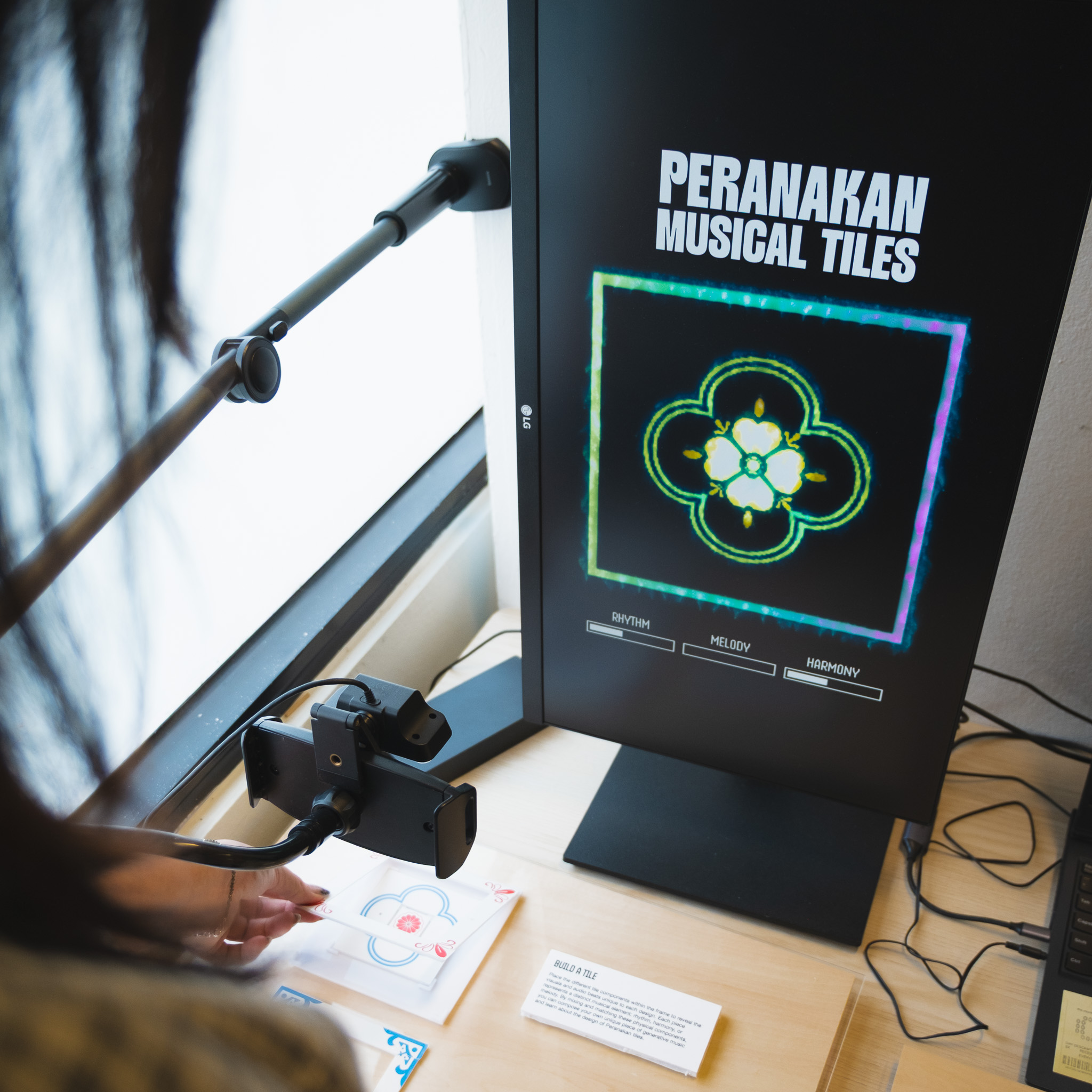
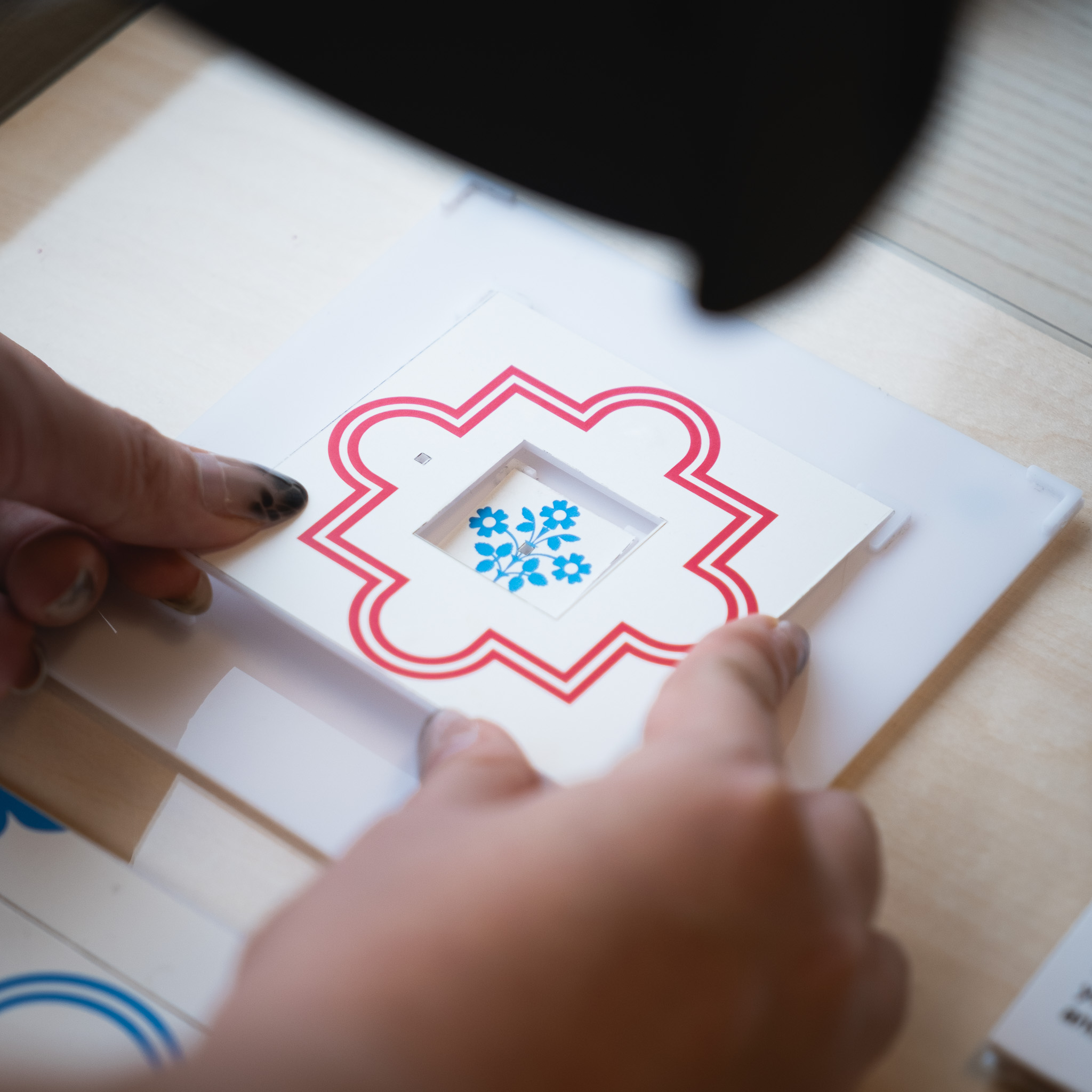
Some participants wanted more possible combinations for their beats. They felt that the current set of designs feel a tad limiting at the moment.
Adding audio wave visualizations can help participants that are not hearing the audio (since currently its on headphones) to understand what's going on.
Andreas gave a great suggestion (of course) to make the distinction between the beats of the two different designs more obvious. This is to make it easier to tell the difference between the designs / audio beats and also to make the composition more dynamic (slow and fast beats together).
I need to rework the physical pieces to be more ergonomic. Right now, it can be difficult to move the inner pieces as there is not enough finger space for users to grab the pieces. The second iteration is to rework the music to make the distinction between the beats of the two designs more obvious. Lastly, I also need to rework the UI to be more visually consistent with my first prototype.
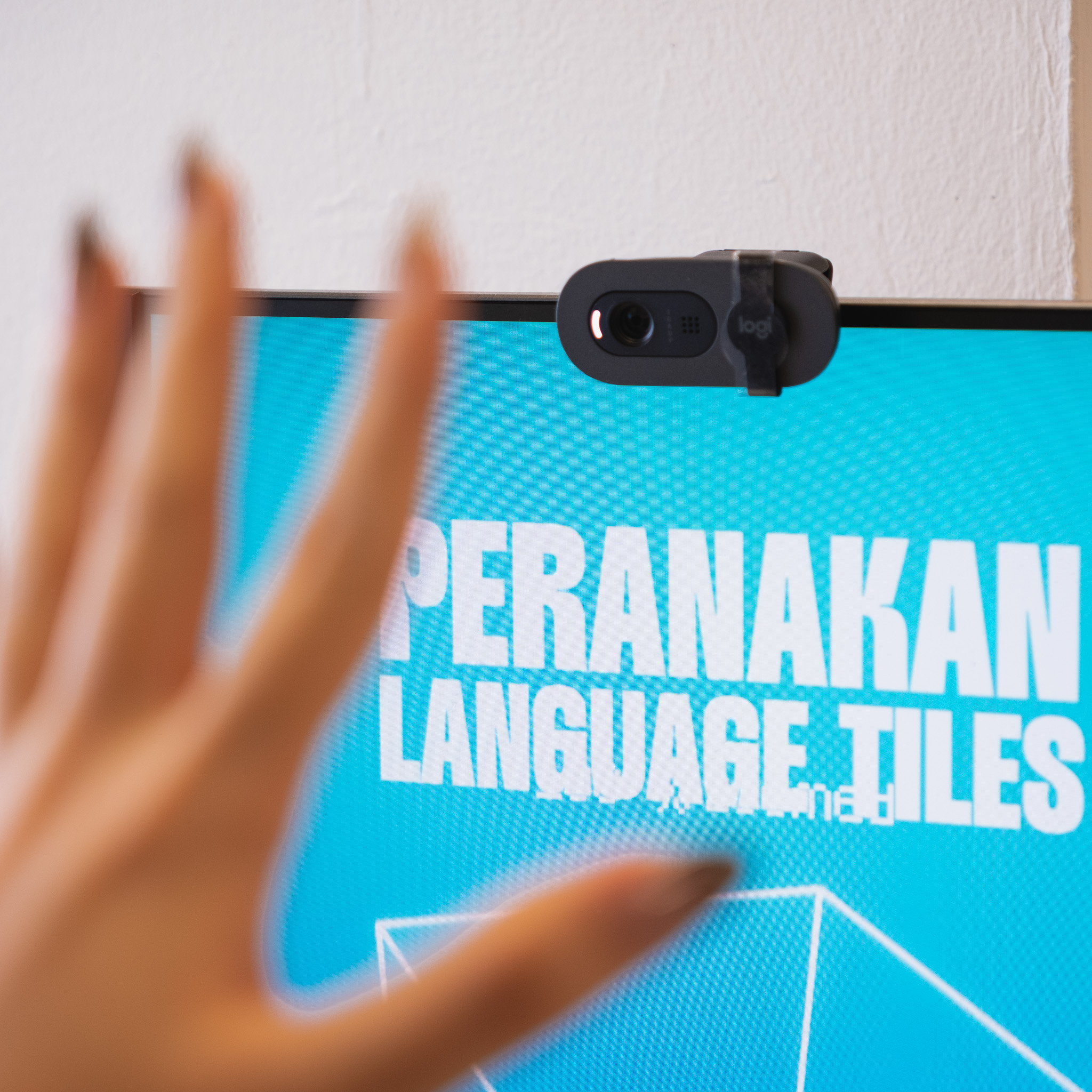
Many participants seemed to really like using hand gestures to manipulate the 3D models in Prototype One due to its ease of use and also a sense of "magic" where they can control something by just moving their hands.
The Music Tiles was the most popular prototype. Many people liked the idea of being able to make their own music, and at the same time do so by just simply collaging tiles. It made making music very approachable for the lay person.
Some industry professionals liked how i designed the interactions, stating that the interactions seems sensible and aligned with the goals of the interface. For example, syllables and tiles have a common characteristics where they both are meant to be combined together to make whole a sentence or a wall tile set.