RPO PRELIM FEEDBACK
First Marker's Preliminary Feedback
During our disseration consultation, I managed to get some RPO feedback from Andreas, who is our first marker. Below are some of the pointers which he shared with me.
Andreas felt that the points made across my various readings were valid and productive. However, he
mentioned that the pillars were lacking relevance and context to the context that I am looking at
(Multisensory Interface and Visual Arts).
Another concern brought up was on the choice of context of visual arts. He felt that the application
was
too straightforward and might restrict explorations of outcomes. The idea of introducing Multisensory
Interface in the viewing of visual arts might also be counter productive (I.E obstruct the viewing of
the art itself)
A helpful direction which Andreas suggested was looking into Interactive brand activations or
experiential learning contexts. This was suggested due to the nature of my current explorations, which
revolves around educating people about different practices (I.E Film developing, Materiality).
The key takeaway here was really the redirection towards experiential learning. I felt that this was the concept which spoke to me and I am personally excited about. Working towards creating interactive learning experience with tech seems to align similarly to what I was doing previously with visual arts: to help people learn more about what they are looking at.
I Found a New Key Concept
With the redirection from Andreas, I started to research keywords such as experiential learning and multisensory interfaces. As I browsed through articles, I found a new key concept which is Embodied Learning.
Embodied Learning proposes that actions, emotions, environment and sensorial experiences can affect what is learned. In the example of learning how to crotchet, whe one goes through the physical practice of crotcheting (action + sensation), in a crotchet studio (environment), feeling fustrated (emotions), they are more likely to be able to obtain knowledge from the physical learning experience. Reason being, they have more data to recall (environment, emotions, actions, sensations) and help them establish a stronger understanding (cognition) of the content they were trying to learn.
Recalling back into the current concepts that I have in my research approach (Sensorial Principles, Cognitive Frameworks, Pillar of Meaning Making), there is a clear link between them and Embodied Learning. Since Embodied Learning is reliant on sensorial experiences, cognition and actions, I can relate the current studies of sensorial principles, Cognitive Frameworks and Multisensory Interface Design (creates actions, sensations) into augmenting Embodied Learning. Thus, this can be my new application, instead of visual arts which was previously a overly niche topic.
Reading 5 - Movement Matters
Movement Matters is a informative book that studies how engaging actions and sensorial experiences help augment our learning through the discussion of concepts like Embodied Learning and Embodied Cognition. They also talked about the interesting history about how psychologists slowly understood the importance of the body in the learning experience, deviating from the olden days understanding of how our brain was the only important part about learning.
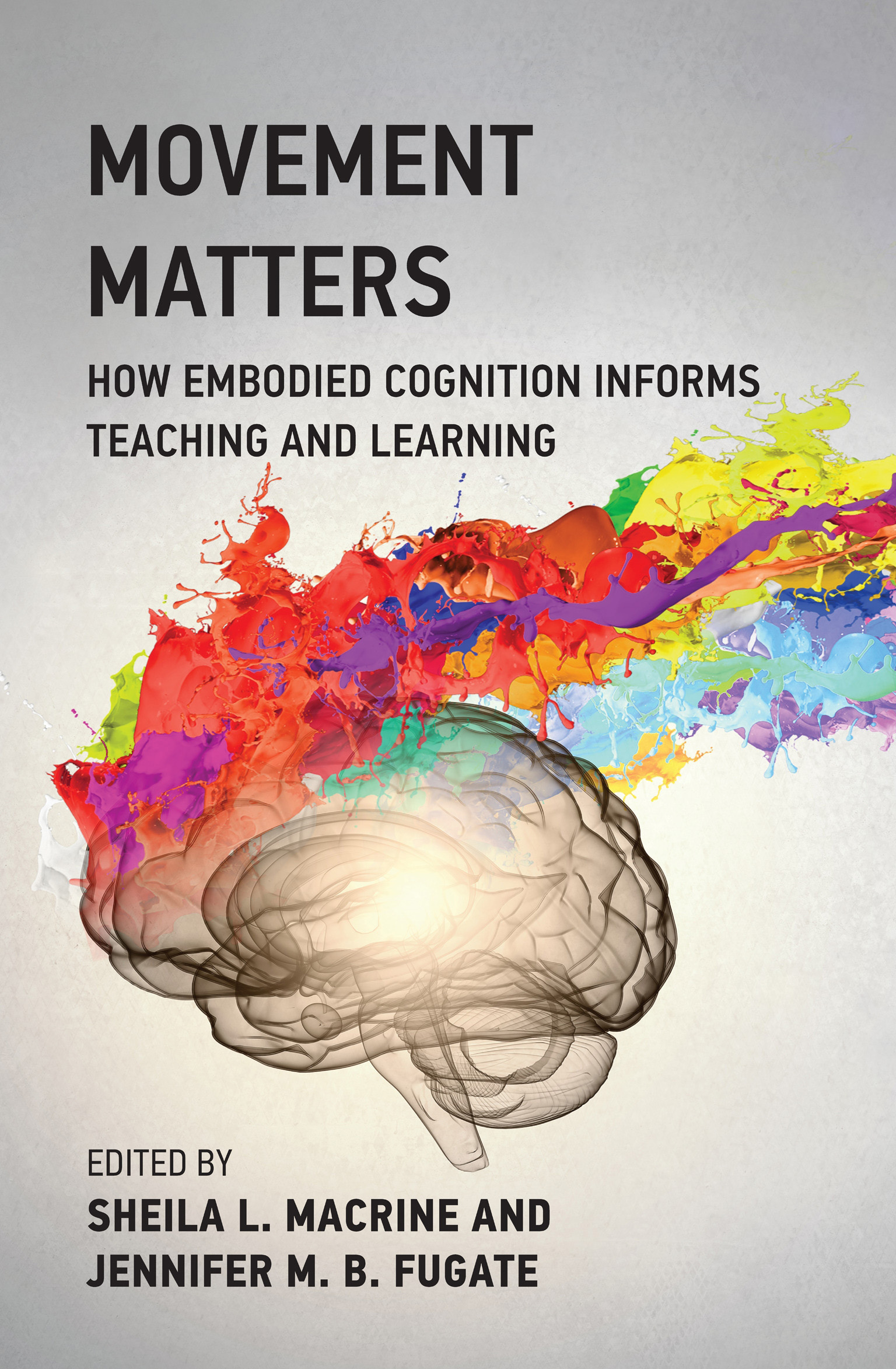
Movement Matters - Macrine and Fugate

Where is my Wallet Comic by Justin Boyd
This was a very interesting concept for me. It discusses how when we remember past events, we try to "relive" the situation. For example, when we lose our wallet, we try to recall and "relive" our journey from our home to "whereever we are at". This method of recalling actually facilitates memory retrieval. The reason being, when we recall and "relive" memory, we actually are activating different parts of our brains to help us recall (I.E activating the cognitive region for vision, hearing seperately). This multimodal manner of recalling is the reason why it facilitates memory retrieval: we have more data to work with.
This discovery highlights an opportunity for Multisensory Interface to create physical learning experience that can later help with memory recall when users try to "relive" their experience they had with the interface. Thus, helping users recall and register more effectively what they learned.

AI generated example of a aesthetic currency vs a simple cartoon currency.
Manipulatives here refer to objects that we can interact. In the context of learning, it is the objects that we interact with to help us learn. This book suggests that the aesthetics of Manipulatives is a important consideration. Some cases, such as when we are trying to understand how currency looks and how it works, having a bright and unique aesthetic might help us learn better. However, if it involves arithmetic calculatios (number maths), then having bland objects might be easier to faciliate cognitive functions.
This is a important note to me when I am designing interactive points / objects for my Multisensory Interface. I should keep in mind the context and need of the experience and make sure that the aesthetics of my tangible interactions are not too distracting to takeaway their learning efficiency.